Why Real Estate Agents Are Ditching Paper Business Cards
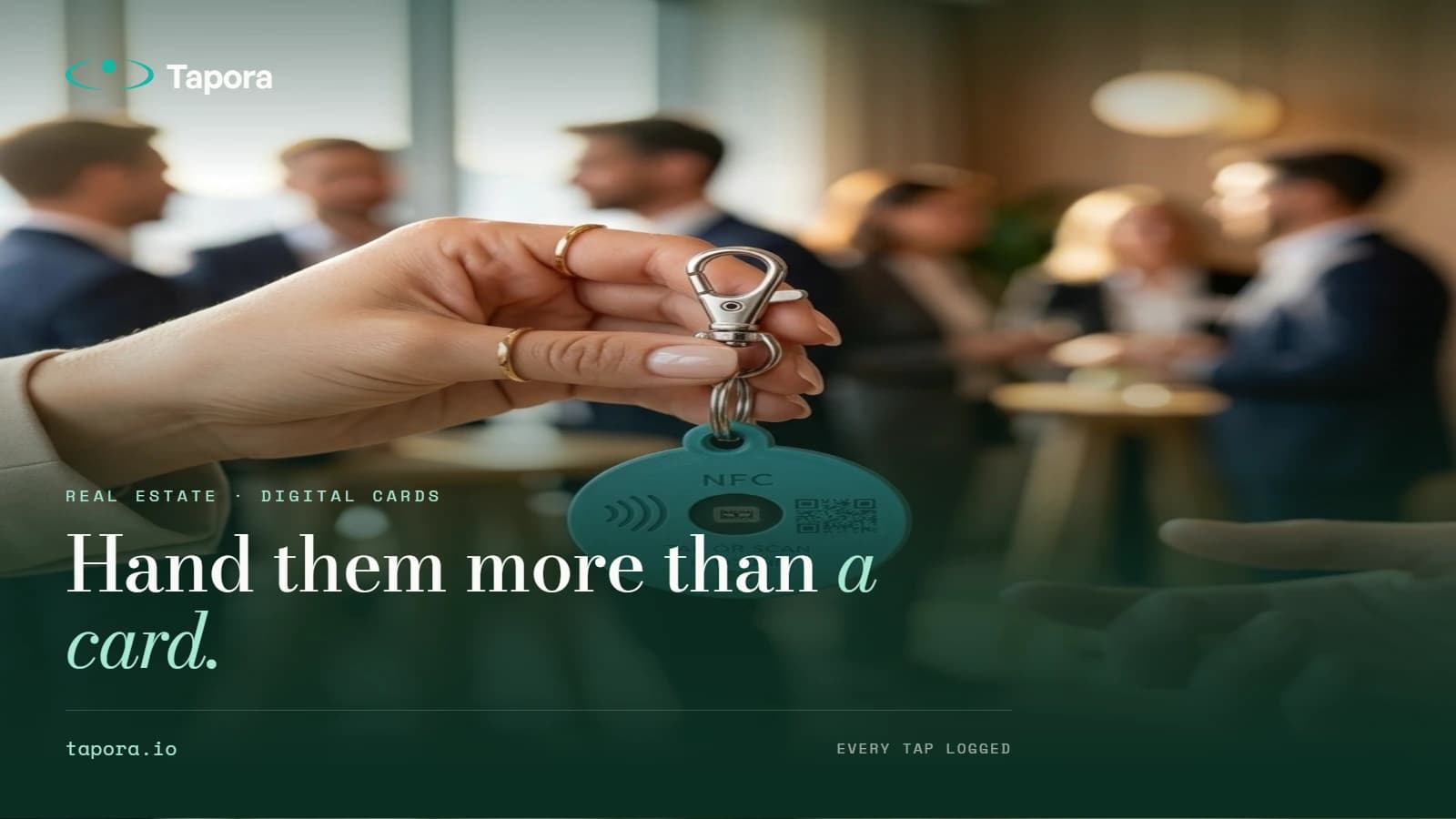
The average real estate agent prints 500 business cards a year. Most get thrown out. The ones that don't end up in a drawer with twelve others, where they'll never be opened again. A single NFC keychain replaces all of it — and unlike a card, it can change what it shows tomorrow.
By Tapora team
The average real estate agent prints 500 business cards a year. Most get thrown out. The ones that don't end up in a drawer with twelve others, where they'll never be opened again. A single NFC keychain replaces all of it — and unlike a card, it can change what it shows tomorrow.
The problem with paper cards in 2026
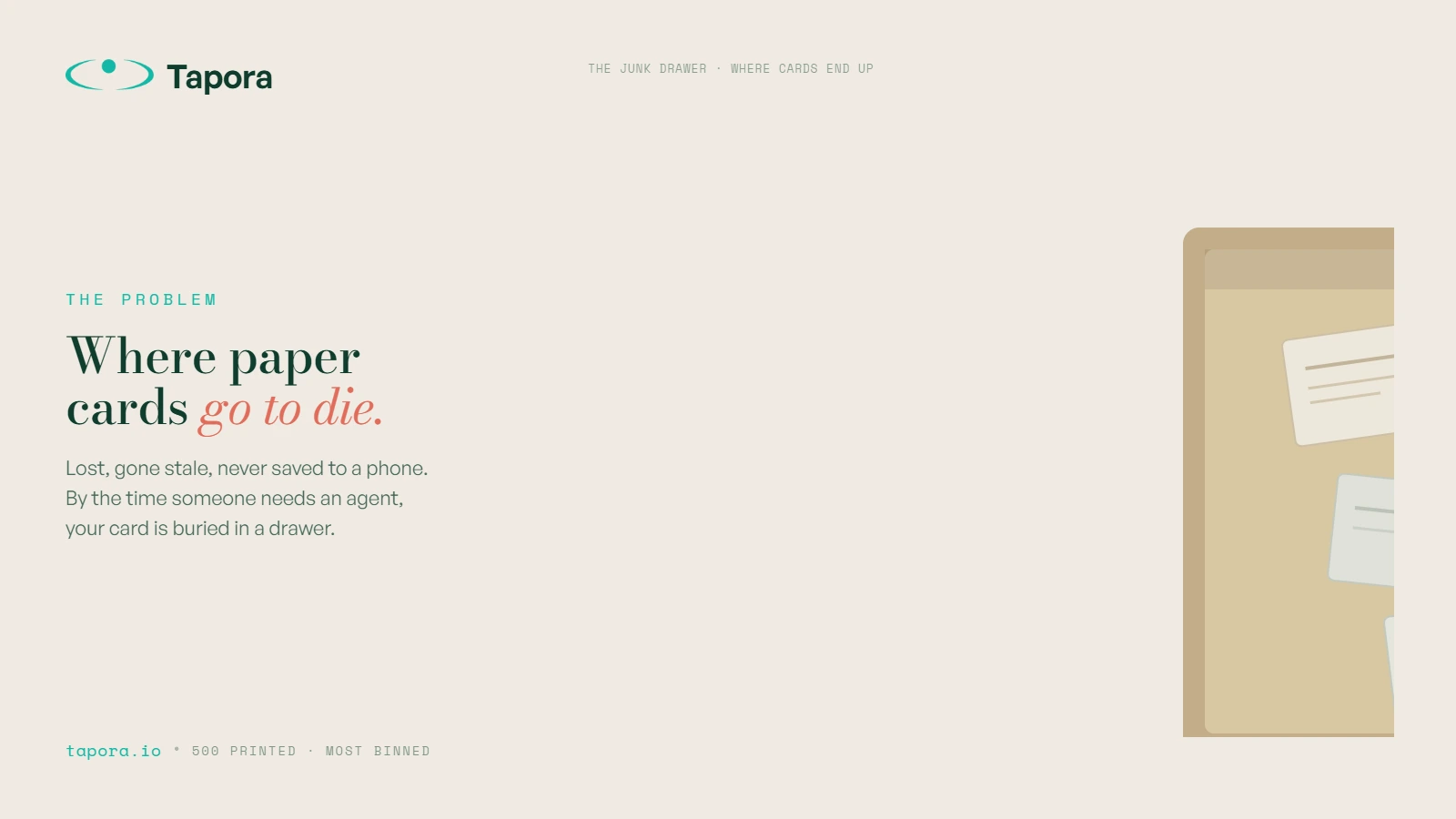
Paper cards have three failure modes: they get lost, the contact info goes stale, and the recipient never adds you to their phone. By the time someone needs an agent, your card is in a drawer next to four expired coupons.
A NFC keychain solves all three. It stays on a keyring (not in a drawer), the destination URL updates from a dashboard (always current), and a tap drops your full vCard into the phone — name, number, email, listings — in one motion.
What a tap actually opens
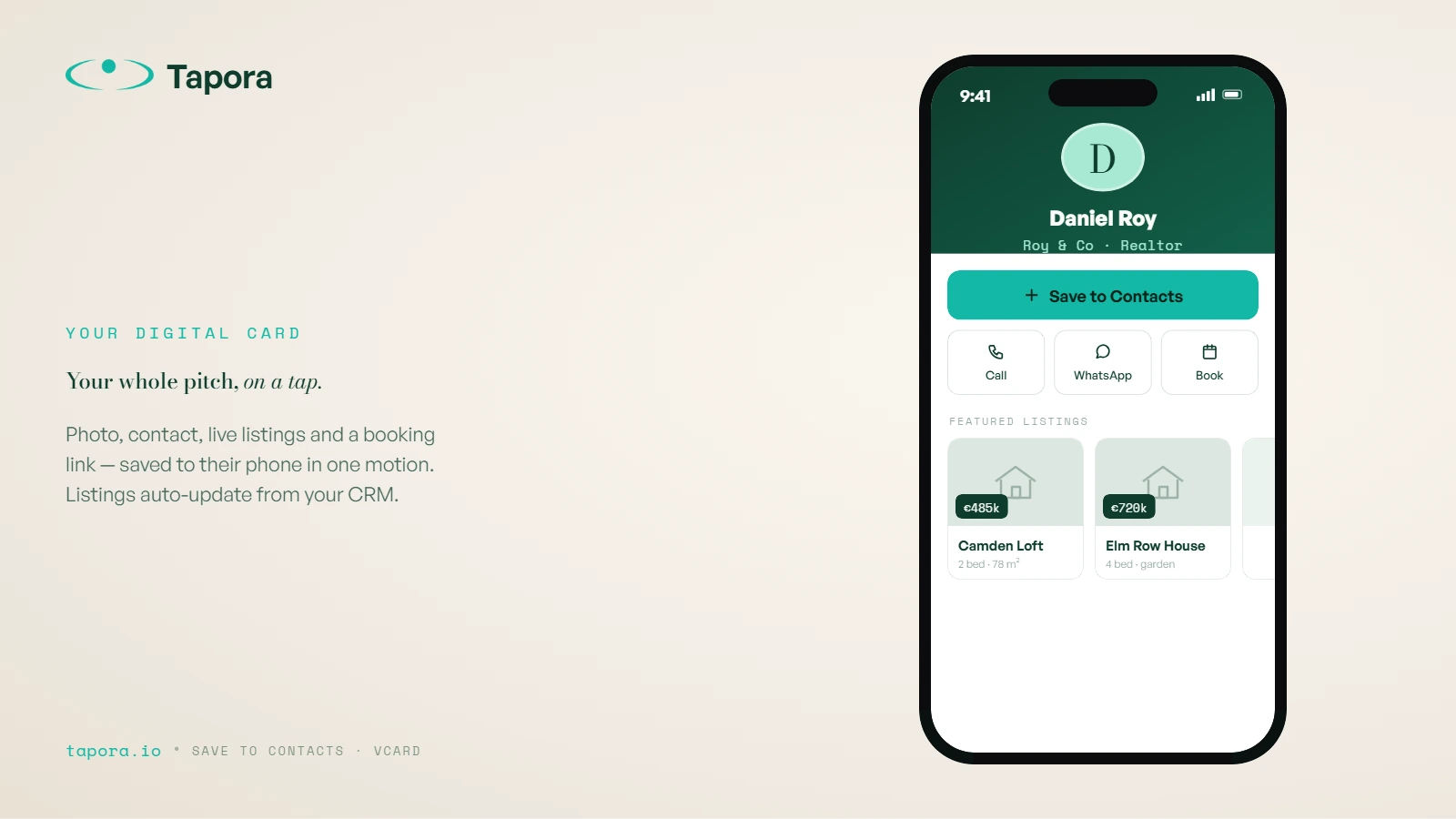
For most agents, the tap routes to a single landing page with:
- Photo + name + brokerage
- One-tap "Save to Contacts" (vCard)
- Current featured listings (auto-updated from your CRM)
- Booking link for viewings
- Direct WhatsApp / SMS button
All on one page. No app. No scanning.
The handoff moment matters
Handing someone a paper card is a polite ritual. Handing someone a keychain is a gift. The interaction itself is different — the recipient examines it, asks about it, taps it to see what happens. Engagement rates on the contact page are roughly 3× a paper card's recall rate, because the recipient actually interacted with you.

Updating listings without reprinting
The killer feature for agents: when your listings change — and they change weekly — your physical keychain doesn't. The link destination updates from the Tapora dashboard, so the keychain handed to a buyer last month still shows this week's listings today.
For agents running open houses, the same keychain handed out at a viewing keeps showing that property's details for as long as it's active, then redirects to "similar listings" once it sells.
Open house signing-in
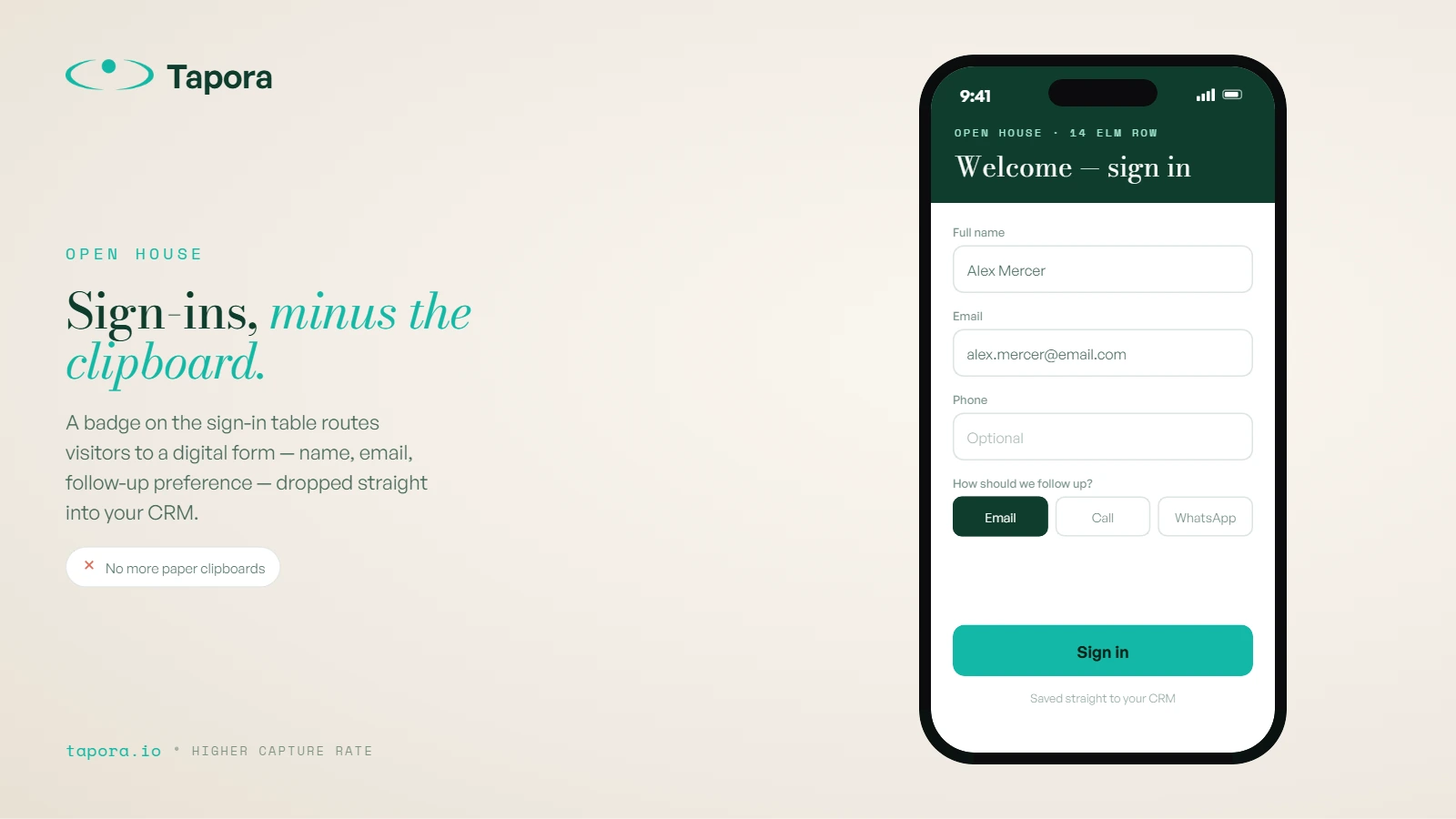
Some agents flip the model: a Tapora badge stuck to the open-house sign-in table routes visitors to a digital form. Phone, email, follow-up preference — captured without paper, dropped straight into the CRM. Higher capture rate than clipboards because the friction is lower.
Brokerages: branded sets
At brokerage scale, custom branding matters. Tapora's pipeline allows two-colour prints with a brokerage logo embedded into the keychain body — not a sticker, but printed into the layers. Each agent gets a unique short URL that resolves to their personal page, while the physical product carries the firm's brand.
What it costs vs paper
A premium printed card runs €0.50–€2 depending on finish, with a 12-month shelf life before the design or info goes stale. A Tapora keychain runs higher up-front but lasts indefinitely and never goes stale. Per useful handoff, NFC is cheaper within 6 months.
Wrap-up
Real estate is a contact-driven business and the contact tools haven't changed in fifty years. Agents who switch to NFC stop printing, start measuring (every tap is logged), and turn each handoff into something memorable. The card was always a placeholder for a website — now the website comes with it.
Continue reading
Guides
One Link, Many Destinations: Using Redirect Kinds to Run Campaigns
The smartest thing you can do with an NFC tag is not hardcode the destination. Tapora links don't point to your final URL — they point to a short URL you control, which means the same physical tag can route to a menu in January, a Valentine's promo in February, and a Google re…
Guides
Shipping From Malta to the EU and Beyond: What to Expect
Tapora prints and ships every order from Malta. For customers in Malta itself, that means next-day delivery. For the EU, it usually means 3–5 working days. For the rest of the world, it depends — and this post explains exactly what to expect, what we charge, and how customs ar…
Guides
Designing an SVG Logo That Prints Cleanly at 30mm
A logo that looks great on a business card can disappear entirely on a 30mm keychain. Two-colour 3D printing has physical constraints that vector design doesn't — stroke widths, minimum feature sizes, and contrast all matter differently. This guide covers how to design (or fix…